
What is clinker in Boiler?
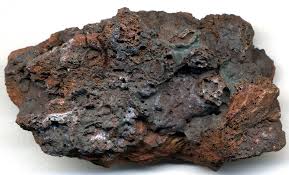
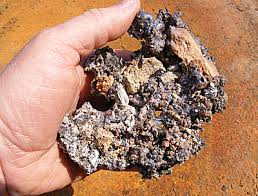
Clinker formation in boilers refers to the development of hard, fused, glassy masses of ash on furnace grates, bed material, or heat-transfer surfaces during combustion. It is a common and serious issue in coal-fired, AFBC/CFBC, and biomass boilers, as it directly affects combustion efficiency and boiler reliability.
How does clinker form?
A clinker is formed when ash constituents partially melt and fuse together due to:
- High furnace temperature
- Low ash fusion temperature
- Presence of fluxing elements (Na, K, Fe, Ca, Mg)
Once cooled, these fused masses become hard and stone-like, restricting air flow and fuel movement.
What are the reasons for clinker formation??
Following are the top major reasons for clinker formation in Boilers
1-Low Ash Fusion Temperature of Coal:
Some coals contain high alkali metals (Na₂O, K₂O), iron (Fe₂O₃), or calcium, which reduce ash melting temperature.
When furnace temperature exceeds ash softening temperature, ash becomes sticky and fuses into hard masses (clinkers).
It is common in high-Fe Indian coals and blended coals
2-Poor Coal Quality
High Ash content
Volatile matter imbalance
Silica–alumina ratio deviation
These above deviation in coal parameters accelerate the clinker formation in Boilers
3-High Furnace Temperature:
Maintaining high furnace temperature in the Boiler due to Over-firing, Poor temperature control & Localized hot spots due to uneven air distribution will lead to the formation of clinker.
4-Improper air fuel mixture
Improper air fuel mixture leads to the formation of clinker as;
Poor secondary air penetration or mal-distribution causes:
Reducing atmosphere (CO rich zone)
Iron oxides converting to low-melting FeO
FeO reacts with silica → → clinker formation.
Low excess air → reducing atmosphere
Promotes formation of low-melting iron compounds,leads to sticky ash and slagging
5-Poor Fuel Preparation
Large fuel size, High moisture & Non-uniform feeding in Boiler helps in formation of clinker in Boiler.
6-Bed Material Issues (AFBC / CFBC)
- Wrong bed material (reactive silica sand)
- Contamination of bed with ash rich in alkali
- And Loss of bed fluidization helps in formation of clinker in Boiler.
7-High Iron Content in Ash
Iron compounds melt early and act as a flux.
Typical in coal contaminated with:
- Laterite soil
- Mine dirt
- Handling contamination
8-Improper Pulverization / Coarse Coal Fineness
Coarse particles: Burn slowly, Fall on furnace bottom or grate & Fuse and agglomerate into clinkers
9-Excessive Moisture in Coal
Causes unstable flame and uneven temperature zones & leads to localized slagging.
10- Operation of the Boiler at Lower Load
Operation of the Boiler at lower load may lead to the formation of clinker due to fluctuation of bed temperature, poor air fuel mixture
11-Poor or No Soot Blowing
Due to no soot blowing deposited ash gets reheated repeatedly. Over time, it sinters and forms clinkers.
What are the consequences or effects of clinker formation in the Boilers?
Following are the major undesired effects of clinker formation on Boiler
1-Reduction in Boiler Efficiency: Clinkers insulate heat transfer surfaces (furnace floor, water walls) leading to reduced heat transfer and more fuel consumption.
2-Restricted Air and Flue Gas Flow
Clinkers block: Air nozzles (AFBC / CFBC),Grates Furnace bottom passages leading into Poor combustion, High pressure drop & Increased FD/ID fan load
3- Combustion Instability: Clinker causes Uneven bed/flame temperature
4-Increase in Unburnt Carbon: Coal trapped in clinkers cannot burn completely leading to high LOI & ash handling issues
5-Damage to Furnace and Pressure Parts:
Clinkers stick to Water walls, Bed coils & Refractory leading to Tube overheating and tube leaks,Refractory spalling and failure and Erosion during clinker fall-off
6-Difficulty in Ash Handling System
Large, hard clinkers Jam ash conveyors
7- Increased Maintenance and Forced Shutdowns: Frequent clinker breaking Manual cleaning during operation may call for Emergency shutdowns for removal.
8-Higher Auxiliary Power Consumption
Clinker formation leads to poor heat transfer and fans over loading eventually leading to higher Auxiliary Power Consumption
How do you avoid formation of clinker in Boilers?
Clinker formation in boilers can be avoided mainly by controlling fuel quality, furnace temperature, air distribution, and ash chemistry. Below is a practical, operation-oriented guideline, suitable for coal, biomass, AFBC, and CFBC boilers.
- Regular ash fusion temperature testing
- Proper coal blending and monitoring
- Maintain correct air–fuel ratio
- Avoid local hot spots
- Ensure proper coal fineness
- Maintain correct bed temperature (for AFBC/CFBC)
- Timely soot blowing and bottom ash removal
- Selecting proper bed material
- Maintaining proper bed height and temperature